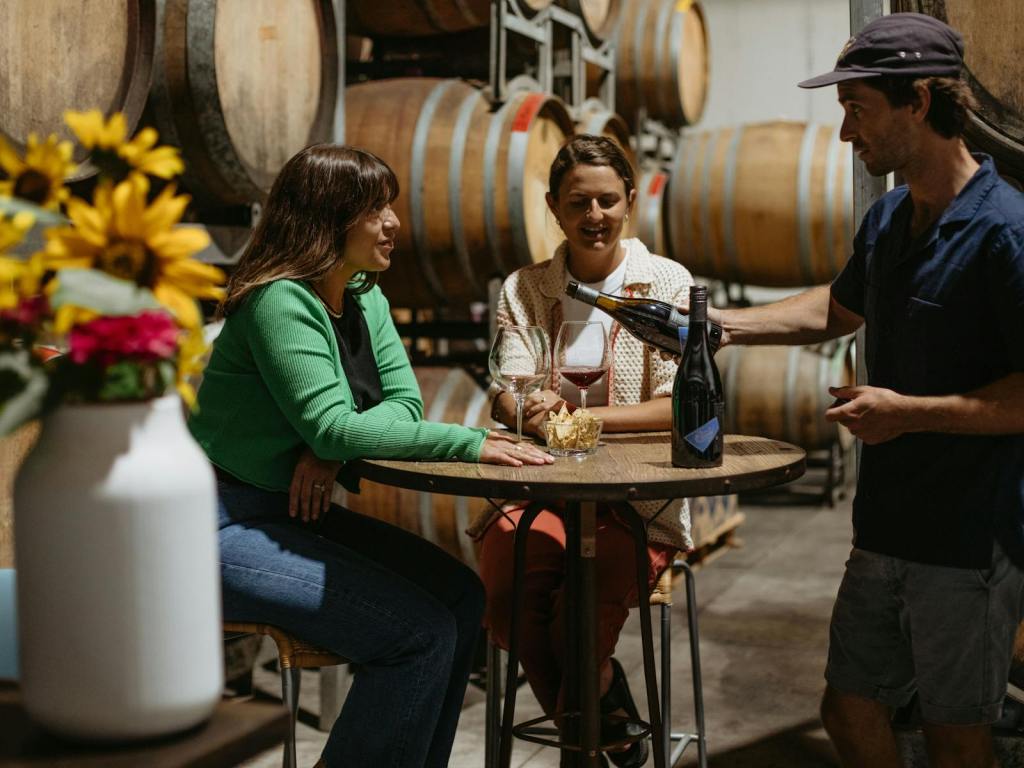
Tasting wine during a wine tasting is an art in itself! It’s all about engaging your senses, so you can truly appreciate the wine’s complexity. Here’s a general process to follow to fully enjoy and evaluate a wine:
1. Look (Visual Inspection)
- Pour the wine into a glass, filling it about one-third of the way. This gives the wine enough space to move around and “breathe.”
- Check the color: Hold the glass by the stem, and tilt it slightly against a white background (like a napkin or tablecloth). The color can tell you a lot about the wine’s age and style. Red wines might range from pale ruby to deep purple, while white wines can range from pale straw to deep golden.
- Look for clarity: The wine should be clear, not cloudy. Any haziness could indicate an issue with production.
2. Smell (Nose)
- Swirl the wine gently: This helps release the wine’s volatile compounds and aromas. You can swirl it for a few seconds, but don’t go too hard to avoid spilling!
- Take a deep sniff: Bring the glass close to your nose and take a few quick sniffs to gather its aromas. What do you smell? Fruit, flowers, herbs, spices, or something earthy? The nose of the wine can give you an idea of its flavor profile.
- Look for intensity and complexity: Does the aroma jump out at you, or is it subtle? Does it evolve with each sniff?
3. Taste (Palate)
- Take a small sip: Let the wine move across your tongue so you can evaluate its flavors. Try to sense the wine’s sweetness, acidity, tannin structure (for reds), and alcohol content.
- Focus on the texture: How does the wine feel in your mouth? Is it smooth, rough, velvety, or more astringent (like tannins in red wine)?
- Evaluate the balance: Does the wine have a harmonious balance between its components? No one element should overpower the others, whether it’s acidity, tannins, sweetness, or alcohol.
- Flavor profile: What flavors do you pick up? Fruit, oak, spices, earthiness, or something savory? Try to identify the various notes that come through on your palate. Often, wines have different “layers” of flavor that become more apparent with time.
4. Finish (Aftertaste)
- Hold the wine in your mouth for a few seconds after swallowing: This gives you a sense of the wine’s finish, or aftertaste. A long, smooth finish is usually a sign of high-quality wine.
- Evaluate the length of the finish: How long does the taste linger after you swallow? The longer the finish, the more complex and well-made the wine might be.
- Is the aftertaste pleasant?: If the flavors linger in a pleasing way, that’s a good sign. If the finish feels harsh or unpleasant, it might indicate that the wine isn’t balanced.
5. Overall Impression
- After you’ve analyzed the wine’s appearance, aroma, taste, and finish, consider your overall impression. Do you enjoy it? Would you drink it again? Is it complex or simple? Is it well-made, or does it feel unbalanced?
Extra Tips for Wine Tasting:
- Pace yourself: Wine tastings are about savoring each wine. Sip slowly and avoid rushing through the tasting.
- Cleanse your palate: Between wines, you can cleanse your palate with water or a small piece of bread, but avoid strong-flavored foods.
- Take notes: It helps to jot down your thoughts on each wine, including its appearance, aroma, taste, and any specific notes you detect.
Wine tasting is both a sensory experience and a personal journey—there’s no right or wrong answer, but the more you practice, the more you’ll be able to articulate what you enjoy about each wine. Have you been to a wine tasting before, or is this something new you’re trying out?